
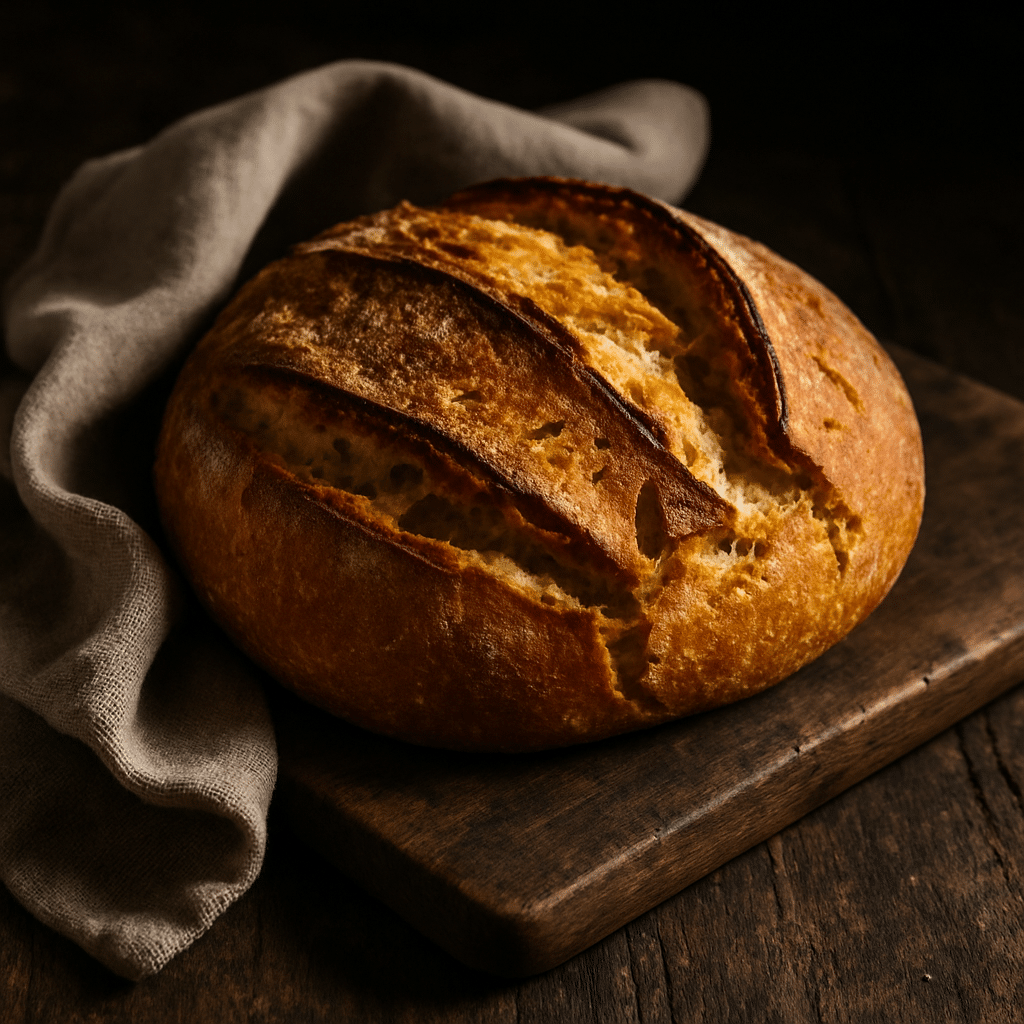
I ruined my first three gluten-free loaves before I figured out what I was doing wrong. Too dense, too gummy, and somehow dry at the same time it felt like the flour was fighting me. Then I stopped kneading entirely. That one change fixed everything. Once I let time do the work, the crumb opened up and the crust finally crackled the way bread should. Now I bake No Knead Gluten Free Bread every week, and I have not touched a stand mixer since.
In this guide you will learn why the no-knead method works so well with gluten-free flour, which ingredients are non-negotiable, and how to bake a loaf that slices cleanly and holds together for sandwiches. I also share the five mistakes I made so you can skip straight to the good results.
Key Takeaways
- A 12 to 18 hour rest replaces kneading completely no strength or equipment needed
- Psyllium husk or xanthan gum is essential for structure in any gluten-free loaf
- A preheated Dutch oven creates the steam that builds a crackly, bakery-style crust
- Gluten-free dough rises less than wheat dough bubbles on the surface are enough
- Cool the loaf fully for at least one hour or the crumb will be gummy when you slice it
Why No Knead Method Works for Gluten Free Bread
Kneading traditional bread builds gluten the protein network that gives wheat bread its chew and structure. Gluten-free flour has no gluten to build, so kneading does nothing useful. What gluten-free dough needs instead is time. A long, slow rest lets the starches hydrate fully and allows the binder psyllium husk or xanthan gum to form a flexible gel that mimics what gluten normally provides.
During that 12 to 18 hour rise, the yeast also ferments slowly, producing organic acids that give the loaf a mild, complex flavor. This is the same principle behind sourdough, applied here without a starter. The result is a No Knead Gluten Free Bread that tastes developed and real, not flat and cardboard-like the way many store-bought gluten-free loaves taste. According to the FDA gluten-free labeling guidelines, products labeled gluten-free must contain fewer than 20 parts per million of gluten making a properly formulated homemade loaf a safe and controllable option for people with celiac disease.
No Knead Gluten Free Bread Ingredients and Equipment
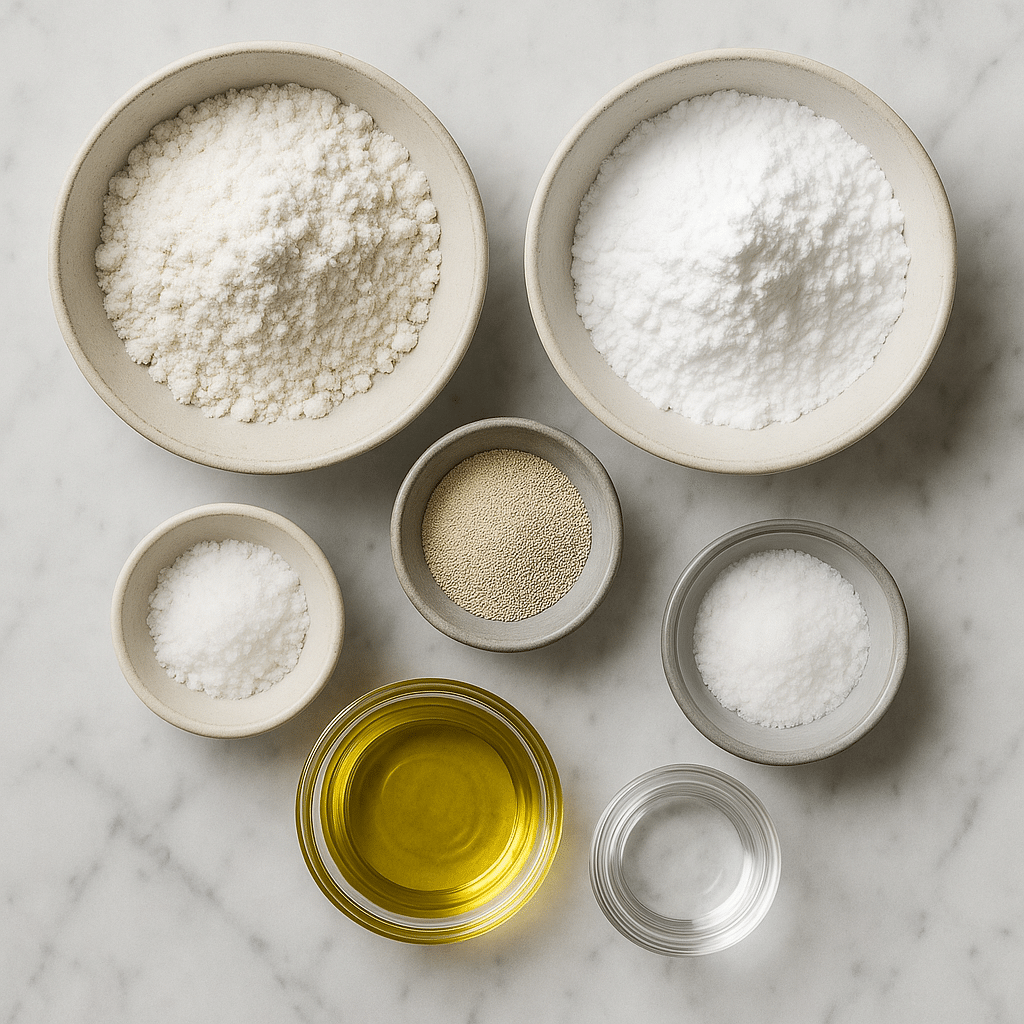
Ingredients you need
- 3 cups gluten-free flour blend use a blend with rice flour and tapioca starch, or a trusted 1-to-1 blend like Bob’s Red Mill or King Arthur Measure for Measure
- 2 tsp instant yeast check the expiration date; old yeast is the number one reason for flat loaves
- 1½ tsp fine salt
- 2 tsp honey or sugar feeds the yeast and adds a subtle warmth to the flavor
- 2¼ cups lukewarm water around 100°F (38°C), not hot
- 2 tbsp olive oil adds moisture and keeps the crumb tender for days
- 1 tsp psyllium husk powder or xanthan gum do not skip this; it is what holds the loaf together
Equipment you need
- A Dutch oven (4 to 6 quart) with a lid this is not optional; it creates the steam environment the crust needs
- Parchment paper to line the pot and prevent sticking
- A large mixing bowl and a sturdy spoon or spatula
- A kitchen thermometer is helpful but not required
If you enjoy simple gluten-free baking, you will also love these gluten-free banana nut bread muffins same easy method, no mixer needed.
No Knead vs Standard Gluten Free Bread Methods
Not sure which gluten-free bread method fits your schedule? This table compares the three most common approaches so you can choose what works for your day.
| Method | Active Time | Total Time | Equipment | Best For | Crust Quality |
|---|---|---|---|---|---|
| No Knead Gluten Free Bread | 10 minutes | 13 to 19 hours | Dutch oven | Beginners, busy schedules | Thick and crackly |
| Standard Gluten Free Sandwich Bread | 30 to 45 minutes | 2 to 3 hours | Stand mixer, loaf pan | Uniform slices, meal prep | Soft, thin crust |
| Gluten Free Bread Machine Loaf | 5 minutes | 3 to 4 hours | Bread machine | Hands-off convenience | Soft, pale crust |
The no-knead method wins for flavor and crust. The standard method wins for sandwich-ready uniform slices. The bread machine wins when you want zero involvement. For most home bakers learning easy gluten free bread from scratch, the no-knead approach is the best place to start.
How to Make No Knead Gluten Free Bread Step by Step
The night before mixing the dough
- In a large bowl, whisk together the gluten-free flour blend, instant yeast, salt, honey, and psyllium husk until evenly combined.
- Pour in the lukewarm water and olive oil. Mix vigorously with a spoon or spatula for about 2 minutes until the dough is smooth, thick, and sticky. It will not look like wheat bread dough that is normal.
- Cover the bowl tightly with plastic wrap or a plate and leave it at room temperature for 12 to 18 hours. You want to see surface bubbles and a slight increase in volume when you check it.
While your dough rests overnight, check out this cottage cheese banana bread for another high-protein, easy-bake loaf you can prep the same evening.
Baking day shaping and baking
- Place your Dutch oven with the lid on inside your oven. Preheat both to 450°F (230°C) for at least 30 minutes. The pot must be blazing hot when the dough goes in.
- Dust a work surface or your hands lightly with rice flour. Gently turn out the dough and shape it into a round ball. Do not over-handle it a few quick folds are enough.
- Place the dough ball seam-side down on a piece of parchment paper. Score the top with a sharp knife or bread lame a simple X cut is enough to guide the rise.
- Carefully remove the hot Dutch oven using thick oven mitts. Lower the dough and parchment into the pot. Put the lid back on.
- Bake covered for 30 minutes, then remove the lid and bake for another 12 to 15 minutes until the crust is deep golden brown.
- Lift the loaf out using the parchment and place it on a wire rack. Wait at least 1 full hour before slicing. This step lets the crumb finish setting cutting early will make the inside gummy.
No Knead Gluten Free Bread: Easy Homemade Recipe That Actually Tastes Great
- Total Time: 13 hours
- Yield: 1 loaf 1x
Description
This No Knead Gluten Free Bread is soft on the inside, golden on the outside, and perfect for sandwiches or toasting. Simple to make with pantry staples.
Ingredients
3 cups gluten-free flour blend
2 tsp instant yeast
2 tsp sugar or honey
1½ tsp salt
2¼ cups lukewarm water
2 tbsp olive oil
Instructions
1. Whisk dry ingredients in a large bowl.
2. Add water and oil. Mix until a sticky dough forms.
3. Cover with plastic wrap and let rise for 12–18 hours at room temperature.
4. Preheat oven and Dutch oven to 450°F.
5. Shape dough gently on floured surface.
6. Place into parchment-lined Dutch oven.
7. Bake covered for 30 minutes.
8. Uncover and bake 15 more minutes.
9. Cool completely before slicing.
Notes
Store wrapped in a towel at room temp for 2–3 days or freeze sliced for longer freshness.
Feel free to mix in herbs, seeds, or sweet additions like cinnamon and raisins.
- Prep Time: 10 minutes
- Cook Time: 45 minutes
- Category: Bread
- Method: Baking
- Cuisine: American
Nutrition
- Serving Size: 1 slice
- Calories: 145
- Sugar: 1g
- Sodium: 210mg
- Fat: 3g
- Saturated Fat: 0.5g
- Unsaturated Fat: 2.2g
- Trans Fat: 0g
- Carbohydrates: 28g
- Fiber: 2g
- Protein: 2.5g
- Cholesterol: 0mg
Keywords: No Knead Gluten Free Bread, easy gluten free bread, homemade gluten-free
5 Mistakes to Avoid With No Knead Gluten Free Bread
- Skipping the binder. Without psyllium husk or xanthan gum, the loaf will crumble the moment you try to slice it. This is the ingredient that holds everything together do not leave it out, even if your flour blend says it already contains xanthan gum. Check the amount and add more if the blend has less than 1 tsp per 3 cups.
- Using cold water. Cold water slows the yeast badly and can cause an uneven rise. The water should feel warm on your wrist about 100°F (38°C). If it is too hot, above 115°F (46°C), it will kill the yeast entirely.
- Not preheating the Dutch oven. The shock of entering a blazing-hot pot is what causes the rapid initial rise called oven spring. A cold pot means a flat, dense loaf. Always preheat for a full 30 minutes.
- Slicing too early. I know the smell is impossible to resist. But cutting into a hot loaf of No Knead Gluten Free Bread before it cools will compress the crumb and leave you with a gummy, wet texture. One hour minimum. Two hours is better.
- Using old yeast. Gluten-free dough already rises less dramatically than wheat dough. If the yeast is old or partially dead, the loaf will not rise at all. Always check the expiration date and, if in doubt, proof the yeast in warm water with a pinch of sugar first it should foam within 10 minutes.
If you are looking for a no-wait baked treat while your loaf cools, these 3-ingredient peanut butter cookies are naturally gluten-free and ready in 15 minutes.
No Knead Gluten Free Bread Storage and Serving Tips
How to store it
Once the loaf is fully cool, wrap it in a clean kitchen towel or place it in a paper bag. This keeps the crust from turning soggy while preventing the crumb from drying out. Store at room temperature and eat within 2 to 3 days. After day three, slice the remainder and freeze it the slices toast directly from frozen in about 3 minutes.
Serving ideas
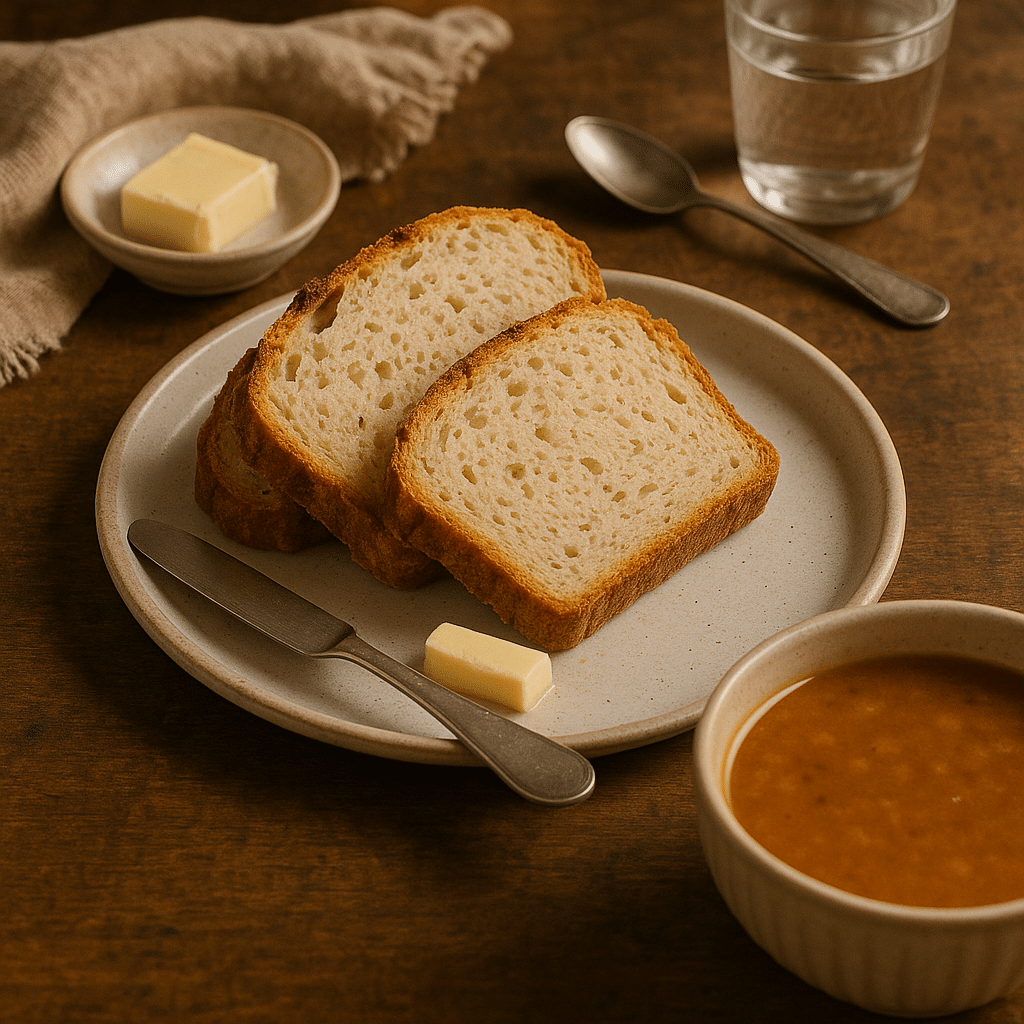
- Warm with butter or olive oil and a pinch of flaky salt the simplest and best way to enjoy it fresh
- Thick slices alongside a bowl of lentil soup or tomato bisque
- Avocado toast with a soft-boiled egg and chili flakes
- Open-faced with smoked salmon, cream cheese, and dill for a weekend brunch
- Cut into cubes, dried in the oven, and used as gluten-free croutons over a Caesar salad
For a quick gluten-friendly breakfast to pair with your bread, these easy cottage cheese bagels are ready in under 30 minutes and work beautifully alongside a warm slice.
For more gluten-free and comfort recipes, follow along on Pinterest. You can also find trusted gluten-free nutrition guidance from the NIH Celiac Disease Awareness Campaign.
Frequently Asked Questions About No Knead Gluten Free Bread
Is there any gluten-free bread that actually tastes good?
Yes, and homemade No Knead Gluten Free Bread is the best proof. The slow fermentation develops real flavor that store-bought loaves rarely achieve. Using the right flour blend, a binder like psyllium husk, and a Dutch oven for steam baking produces a loaf that genuinely rivals traditional wheat bread in taste and texture.
What is the secret to baking good gluten-free bread?
Three things: a reliable binder, correct hydration, and steam. Psyllium husk or xanthan gum replaces gluten’s binding role. Proper hydration keeps the crumb moist. Baking in a covered Dutch oven traps steam during the first 30 minutes, which softens the crust and allows maximum oven spring before it sets hard and golden.
Does the no knead method really work for gluten-free baking?
Absolutely. Kneading builds gluten, which gluten-free flour does not have. The no-knead method replaces kneading with time a 12 to 18 hour slow rise fully hydrates the starch and activates the binder. The result is a well-structured No Knead Gluten Free Bread with an open crumb and a thick, crackly crust.
What is the biggest challenge with gluten-free baking?
Structure is the hardest part. Without gluten, the dough has nothing to trap the gas bubbles yeast produces. This is why binders are non-negotiable and why hydration levels matter more in gluten-free baking than in wheat baking. Long fermentation and hot steam baking both help compensate for the absence of gluten’s natural elasticity.
Can I make no knead gluten free bread without a Dutch oven?
You can, but the crust will be softer. Place the dough in a lightly greased loaf pan and cover it tightly with foil for the first 30 minutes of baking, then remove the foil for the final 15. This mimics the steam environment of a Dutch oven. The crumb will be similar, though the crust will not develop the same thick crackle.
How long does no knead gluten free bread last?
At room temperature wrapped in a kitchen towel, No Knead Gluten Free Bread stays good for 2 to 3 days. After that, slice the loaf and freeze the slices. Frozen slices toast directly from the freezer in 3 to 4 minutes and taste just as good as fresh. Refrigerating the loaf is not recommended it dries out faster in the fridge than at room temperature.
Why is my gluten-free bread gummy inside?
The most common reason is slicing too early. The internal structure of No Knead Gluten Free Bread continues to set as the loaf cools. Cutting into it before it reaches room temperature at least one hour after baking compresses the crumb and creates that wet, gummy texture. Too much liquid in the dough or underbaking can also cause gumminess.
Pair your morning slice with this crowd-pleasing simple pancake recipe for two for a complete gluten-friendly brunch spread.
I have baked this loaf more times than I can count, and it still feels like a small miracle every time I lift it out of the Dutch oven. No Knead Gluten Free Bread asks very little from you ten minutes of mixing, a night of patience, and thirty minutes of heat. That is it. No stand mixer, no complicated shaping, no specialty equipment beyond a pot with a lid.
What you get in return is a loaf that slices cleanly, toasts beautifully, holds together for sandwiches, and actually tastes like real bread. If you have been disappointed by gluten-free baking before, I hope this recipe changes that. Start it on a Friday evening. By Saturday morning, your kitchen will smell incredible.
Try it once, make one small adjustment if needed, and then make it yours. Add rosemary, fold in seeds, swap in buckwheat flour this recipe welcomes all of it. And when you do bake it, I would love to hear how it turned out. Leave a comment below or share a photo on Pinterest so others can find it too..